Discover how Chati's self-service licenses give you full control - build, update, and launch virtual events on your terms. Register for our free webinar today!
Webinars have become key methods for sharing information and engaging with a global audience while helping them achieve their personal and professional goals. However, tracking webinar performance is critical for webinar success because basic sign-up numbers fail to capture true viewer interest or long-term business impact. By leveraging comprehensive analytics, organizers gain a clear understanding of audience behavior, uncover meaningful opportunities for content improvement, and calculate return on investment (ROI).
Here, we will discuss identifying the specific metrics that matter most and providing practical strategies to apply them effectively across your upcoming events, including engagement metrics, lead generation, platform metrics, improving future webinars, and more. Through this, you will have the tools and resources to host a successful webinar for global audiences.

Comparing registration numbers against actual live attendance serves as a clear indication for gauging topic appeal and promotion impact. Beyond total viewer counts, analyzing drop-off points alongside average watch time reveals crucial engagement metrics throughout the presentation. Consistently tracking returning attendees across multiple sessions further highlights growing brand loyalty, validating that your overarching event strategy continues to deliver genuine value to your target audience.

Audience participation in live polls, Q&A sessions, chat channels, and interactive gamification activities offers immediate visibility into viewer attention. Tracking click-through rates on embedded links, resource downloads, and call-to-action buttons measures real-time interest during the broadcast. In the end, a high level of direct interaction correlates with content relevance, indicating that attendees are actively participating in the material being presented.

Capturing strong registration data enables marketing teams to gather key participant behavior and generate well-qualified sales leads. Following the event, tracking post-webinar actions, including demo requests, content downloads, software sign-ups, or direct purchases, indicates immediate prospect movement through the process. Calculating these distinct conversion rates provides the clear quantitative baseline required to evaluate webinar ROI and justify future marketing spending trends.

Measuring which specific presentation topics or speaker segments keep attendees the longest indicates precisely what content impacts best with your audience. Complementing this data with direct feedback from post-webinar surveys and attendee ratings delivers a full picture of attendee satisfaction. Identifying these performance gaps allows content creators to address weaknesses, fine-tune messaging, and precisely optimize future webinar goals and strategies.

Monitoring technical issues, including connection instability, device compatibility hurdles, or unexpected stream drop-offs, prevents technical issues from impacting viewer retention. Consistently tracking core platform performance metrics, including high-definition streaming quality, session uptime, and universal accessibility, ensures a stable viewing experience. Delivering a smooth, uninterrupted environment is foundational to keeping participants comfortable, focused, and engaged throughout the entire event.

Categorizing post-event audiences based on their specific engagement levels and behavioral data allows teams to build highly customized follow-up campaigns. Using data-driven insights to adjust future event timing, content formatting, or presentation delivery drives continuous program enhancement. Over time, identifying broader trends across multiple webcasts helps refine the broader marketing strategy, optimize resource allocation, and consistently increase overall ROI.
Summary
Here, we discussed identifying the specific metrics that matter most and providing practical strategies to apply them effectively across your upcoming events, including engagement metrics, lead generation, platform metrics, improving future webinars, and more. Through this, you now have the tools and resources to host a successful webinar for global audiences.

Sustained event growth relies on continuously evaluating a balanced checklist of attendance, live engagement, lead generation capture, content quality, and platform performance. Grounding your strategic decisions in actionable data improves live event outcomes while delivering clear, measurable business impact. To turn these data insights into sustainable growth, leverage advanced digital event platforms like Chati to track, evaluate, and scale your webinar operations efficiently. Please contact Chati if you’re interested in learning how to identify webinar metrics to improve your webinar skills today.
A webinar series delivers multiple sessions over time, unlike a single standalone event, enabling ongoing engagement and deeper learning. This sustained format strengthens audience relationships and enhances brand visibility. Here, we explore how to evaluate the return on investment (ROI) of hosting a webinar series to determine its overall value, including audience engagement, cost-effectiveness, monetization, and much more. Through this, you will gain the skills and knowledge to host a successful, impactful webinar series that focuses on ROI and attendee goals.

A webinar series nurtures leads across multiple sessions, steadily building trust and boosting conversion potential. You can capture valuable attendee data through registration and follow-up forms, then use targeted, session-specific content to guide prospects through each stage of the sales funnel more effectively.

Recurring sessions encourage audiences to return, steadily boosting engagement and loyalty. By incorporating interactive elements like Q&A, polls, and follow-up challenges, each session becomes more immersive and memorable. This ongoing connection strengthens long-term relationships with participants, increasing their trust and overall investment in your brand.

A consistent webinar series helps establish your organization as an industry authority, especially when supported by case studies, expert panels, and guest speakers. Its influence extends well beyond live sessions through recordings, on-demand access, and social sharing, allowing your expertise to reach broader audiences and strengthen long-term credibility.

A webinar series offers substantial cost advantages compared to physical events, eliminating expenses for travel, venues, and logistics. Its scalability allows you to reach more participants at a lower cost per session, while also reducing spending on printed materials, speaker arrangements, and staff time—boosting overall efficiency and value.

Track key metrics such as attendance, engagement, lead conversions, and session completion rates to measure performance. Segment participants to identify which topics or sessions delivered the strongest results. Use these analytics to refine future content, optimize your webinar strategy, and clearly demonstrate ROI to internal stakeholders.

A webinar series can generate revenue through sponsorships, premium content, and post-series materials. It also creates opportunities to upsell products, services, or training programs to an already engaged audience. With recurring sessions, you can generate ongoing revenue as participants return and deepen their investment in your offerings.
Summary
Here, we explored how to evaluate the return on investment (ROI) of hosting a webinar series to determine its overall value, including audience engagement, cost-effectiveness, monetization, and much more. Now, you have the tools and resources to host a successful, impactful webinar series that focuses on ROI and attendee goals.

A webinar series delivers strong ROI through lead generation, sustained engagement, brand authority, cost savings, and robust analytics. Organizations should strategically plan, promote, and measure their series to maximize impact. To elevate results even further, leverage platforms like Chati to host engaging, data-driven webinar series that drive long-term success. Please contact Chati if you would like to learn how we can improve our webinars so you can achieve the most ROI in the future.
Virtual events—digital gatherings enabling global participation—are increasingly vital across corporate, educational, and nonprofit sectors. As organizations transition from traditional in-person formats to digital-first experiences, they gain greater flexibility, cost savings, and operational efficiency. This article explores the primary benefits of hosting virtual events and how they enhance engagement, accessibility, and organizational impact in today’s connected world.
Here, we will discuss the top benefits of hosting virtual events, including cost savings, enhanced engagement, sustainability, and more. Through this, you will be able to host successful and engaging virtual events while helping your attendees achieve their personal and professional goals.

Virtual events remove travel barriers, enabling participation from anywhere in the world. They foster inclusivity by welcoming attendees across diverse regions, backgrounds, and time zones. From global webinars and international conferences to large-scale virtual trade shows, these digital platforms connect hundreds or even thousands of participants, creating accessible, borderless opportunities for learning, networking, and collaboration.

Virtual events significantly cut costs by eliminating expenses for venues, catering, travel, and printed materials. Organizations also save on staffing and logistics while still delivering engaging, high-quality experiences. These financial savings can be strategically reinvested in marketing, content development, or enhanced event features to maximize reach, engagement, and overall impact.

Virtual events offer unmatched flexibility by accommodating busy schedules through on-demand access and multiple session times. Organizers can easily host hybrid or multi-day formats without added costs. Attendees benefit from convenience—no travel required, effortless participation, and access to recorded sessions—making it easier to engage, learn, and connect on their own terms.

Virtual events enhance engagement through tools like live polls, chat rooms, breakout sessions, and gamified challenges that encourage active participation. Real-time feedback and two-way communication between speakers and attendees create dynamic, interactive experiences. Successful strategies—such as Q&A sessions, virtual networking lounges, and leaderboard-based games—help sustain attention and boost audience involvement throughout events.

Virtual event platforms track key metrics like attendance, engagement, and content consumption, providing valuable performance data. These insights help organizers refine future events, optimize marketing strategies, and demonstrate ROI. For sponsors, actionable analytics reveal audience interests and behaviors, enabling more targeted outreach and improved event effectiveness overall.

Virtual events significantly reduce carbon footprints by eliminating travel and minimizing resource use. They align seamlessly with corporate social responsibility and sustainability goals, promoting eco-friendly practices. Organizers can further enhance environmental impact through initiatives such as paperless registration, digital swag, and carbon offset programs that support greener, more responsible event strategies.
Summary
Here, we discussed the top benefits of hosting virtual events, including cost savings, enhanced engagement, sustainability, and more. You now have the tools and resources to host a successful virtual event, maximizing engagement and fostering diversity, inclusivity, and accessibility for individuals worldwide.
Virtual events deliver wide-ranging benefits—global reach, cost savings, flexibility, engagement, measurable insights, and sustainability. Far beyond a temporary alternative, they represent a strategic asset for long-term growth and connection in the digital age. Please contact Chati if you are seeking to elevate your online presence to host impactful, data-driven virtual experiences.
Virtual events are designed to connect individuals from various personal and professional backgrounds to build networks and foster lasting relationships. The growing importance of data in the events industry, specifically in virtual events, enables networking and relationship-building to happen.
This is because virtual event analytics provide insights into attendee behavior, engagement, and event outcomes, enabling event organizers to monitor where and how connections and networking occur among attendees.
Here, we will discuss how data-driven decision-making transforms event planning and measuring success, including key performance indicators, strategies, data, virtual events' future, and more. With this knowledge, you will be able to organize and execute a successful and impactful virtual event while incorporating data-driven analytics to help your attendees achieve their personal and professional goals.

For attendee engagement, key metrics to track engagement, including session views, poll responses, Q&A participation, and interactions with event content, are essential KPIs for ensuring your attendees are connecting and building their virtual networks. Audience retention is another important KPI, as understanding how long attendees stay engaged and identifying areas for improvement in content delivery ensures attendees stay focused during sessions.
Tracking attendee activity in networking spaces, such as messaging, 1:1 meetings, and group discussions, is crucial for establishing networking interactions among attendees, enabling them to meet individuals within their field. Tracking registration versus attendance is essential for identifying the conversion rate from registration to attendance and its significance in evaluating the effectiveness of marketing strategies. Finally, session popularity identifies the most attended sessions, topics, and speakers, and uses this data to guide content creation in future events.

Using data to monitor real-time analytics enables the power of tracking attendee behavior and engagement during an event for immediate insights. It allows organizers to make immediate changes should any concerns arise during the virtual event. Analyzing post-event analytics like session replay views, post-event surveys, and overall event satisfaction to measure the virtual event's success is crucial for identifying areas of improvement for future virtual events. Evaluating behavioral analytics enables tracking specific attendee actions, such as which content they interacted with, what they downloaded, and how they navigated the platform. Finally, tracking engagement metrics is crucial for assessing attendee interaction with features like virtual booths, chats, polls, and networking tools.

Chati is proud to offer built-in analytics and third-party tools for tracking data, including behavior tracking, real-time event dashboards, speaker analytics, exhibitor performance, direct feedback, and more. These are used to track KPIs like registrations, live engagement, and post-event feedback, enabling Chati to identify areas of improvement regarding attendee engagement and participation. Through this, Chati highlights the benefits of custom reporting and dashboards to present data in an actionable way, thus enabling real-time adjustments while documenting improvements that can be made for future virtual events.

Identifying areas for improvement is crucial for growth and success, and using data insights to refine event formats, content, and session structures for future virtual events is essential for organizing and hosting future virtual events. Additionally, analyzing which topics and speakers gained the most attention and adjusting the virtual event's theme accordingly will ensure a seamless experience for attendees and guest speakers. Finally, segmenting data to understand different attendee groups and their preferences helps create personalized experiences for everyone.

Virtual event data helps to measure ROI through lead generation, audience engagement, and sponsor satisfaction, enabling companies to build their brand while attracting potential employees, investors, and clients. Additionally, using data to calculate event success beyond just attendance numbers while focusing on attendee conversion, sales, and engagement levels is essential for maximizing ROI. Finally, data-driven insights help reduce costs by optimizing event processes and increasing efficiency, resulting in a seamless experience while maximizing ROI.
Summary
Here, we discussed the importance of measuring virtual event success through analytics, including key performance indicators, strategies, data, the future of virtual events, and more. We encourage event organizers to use data to continuously improve virtual event planning, increase engagement, and drive ROI, as this also leads to increased engagement, larger virtual networks, and enabling individuals worldwide to achieve their personal and professional goals.

The growing role of analytics in virtual events and their potential to shape the future of the event industry cannot be understated, as analytics provides key insights into attendee behavior, engagement, and participation that can be used to improve virtual events worldwide. Please contact Chati if you have any questions regarding how we can improve our analytics to result in enhanced virtual events.
With the rise of virtual events, especially during the COVID-19 pandemic, organizations and individuals worldwide have become more connected to collaborate and innovate in a safe and professional environment. Like all endeavors, virtual events are successful from constant improvement through real-time and long-term feedback from attendees and organizers.
Here, we will discuss the evolution of virtual event analytics, including real-time engagement tracking, AI-powered personalization, multi-channel attribution, data privacy, continuous improvement, and much more. After reading this blog, you will have the knowledge and foresight to use virtual event analytics to create and execute impactful virtual events for individuals and organizations worldwide.

Traditional metrics such as attendance, engagement, and feedback continue to be instrumental in evaluating virtual event impact and connectivity. However, these analytics are often obtained during post-event surveys. This can be improved by exploring reporting tools and dashboards for analyzing event performance, resulting in real-time metrics so event organizers can make real-time decisions and adjustments. Through this, you highlight the limitations of traditional metrics in providing actionable insights and take steps toward improving virtual events through real-time performance metrics.

The shift towards real-time engagement tracking and audience behavior analysis has evolved from the need for immediate information and data, primarily from the advent of social media where users can get instant information at their fingertips. Therefore, real-time analytics can be achieved by exploring features such as live polling, chat analytics, and session heatmaps that provide virtual event organizers with immediate feedback on attendee engagement metrics and make real-time adjustments. Through this, you highlight the benefits of real-time insights for optimizing event content and engagement while constantly striving for short- and long-term improvement.

The emergence of predictive analytics and forecasting models in virtual event analytics resulted from the need to gauge audience preferences before the virtual event. Hence, event organizers are better prepared to deliver and execute the most impactful virtual event possible. This is accomplished through predictive attendance modeling, session popularity forecasting, and audience segmentation, which empower event organizers with the tools and resources to deliver engaging and thought-provoking content for everyone. Through this, you highlight the potential of predictive insights for anticipating attendee behavior and tailoring event experiences for individuals and organizations worldwide.

The role of AI-powered personalization and content recommendations in virtual event analytics has the potential to revolutionize the preparation, strategy, and delivery of impactful virtual event content and engagement tools for attendees and event organizers. This can be accomplished through features such as session suggestions, agenda customization, and content recommendations while decreasing the labor and time of traditional methods for preparing virtual events. Through this, you highlight the benefits of personalized experiences for enhancing attendee engagement and satisfaction while delivering impactful and meaningful content for everyone.

The importance of integrated data analytics across event touchpoints has become essential in developing and delivering successful virtual events worldwide. This is accomplished through features such as customer relationship management (CRM) integration, marketing automation platforms, and social media analytics, which can be evaluated during the planning stages of the virtual event but also conducted in real time during the virtual event. Through this, you highlight the value of holistic data analysis for understanding the attendee's journey and behavior throughout the virtual event.

Multi-channel attribution and conversion tracking in virtual event analytics are essential for attracting new attendees while maintaining lasting relationships with past attendees. This is accomplished through features such as cross-channel attribution models, conversion funnels, and return on investment (ROI) tracking that can be strategized and established during the planning stages of the virtual event while making real-time adjustments throughout the virtual event. Through this, you highlight the importance of attribution modeling for understanding event impact and effectiveness for new and returning attendees.

Advanced data visualization and insights dashboards for virtual event analytics are essential for real-time tracking and adjustments while striving to improve future virtual events. This is accomplished through interactive dashboards, data visualization tools, and custom reports designed to provide real-time information regarding attendee engagement and behavior throughout the virtual event. Through this, you highlight the role of data visualization in communicating insights and driving actionable decisions for current and future virtual events.

Data privacy and compliance considerations in virtual event analytics are essential for creating a safe and secure environment for attendees, guest speakers, and organizers so they can focus on the virtual event without worrying about personal or professional information being stolen or leaving the confines of the virtual event. This is accomplished through features such as General Data Protection Regulation (GDPR) compliance, data encryption, and user consent management, which ensure that data is secure for all parties. Through this, you highlight the importance of protecting attendee data and ensuring compliance with regulatory requirements.

Emerging technologies and future trends in virtual event analytics are essential for constant improvement and evolution to meet the needs and expectations of virtual event attendees worldwide. This is accomplished by exploring potential applications such as augmented analytics, Internet of Things (IoT) data integration, and blockchain-based tracking, which are used to perform real-time engagement metrics analysis while planning future virtual events. Through this, you highlight the role of innovation and experimentation in shaping the future of virtual event analytics while constantly striving to improve the impact and connectivity of virtual events for individuals and organizations worldwide.

Continuous improvement and optimization strategies for virtual event analytics are essential for maintaining the growing need for virtual events to connect individuals and organizations worldwide. This is accomplished through A/B testing, experimentation frameworks, and iterative learning, designed to encourage constant improvement and evolution toward delivering impactful and meaningful content for virtual event attendees and organizers. Through this, you highlight the importance of iterative improvement for maximizing event ROI and impact while helping individuals and organizations build lasting relationships.
Summary
Here, we discussed the evolution of virtual event analytics, including real-time engagement tracking, AI-powered personalization, multi-channel attribution, data privacy, continuous improvement, and much more. Now, you can plan, strategize, and deliver impactful and meaningful virtual events for individuals and organizations worldwide while constantly striving to improve your virtual events by staying updated with trends and regulations. We emphasize the importance of data-driven decision-making and continuous improvement regarding the future of virtual event analytics and predictive insights, resulting in individuals and organizations developing lasting relationships.

We encourage readers to implement advanced analytics strategies in their virtual events so they can constantly improve their strategies for delivering impactful experiences for everyone. We invite feedback and comments on virtual event analytics practices from readers and how Chati can improve our analytics, and we encourage readers to contact Chati regarding further inquiries.
Remote work has become increasingly prevalent today, and mastering the art of virtual team building is paramount for fostering effective collaboration and maintaining team cohesion. In this blog post, we delve into the significance of virtual team building and unveil innovative strategies to enhance remote team engagement. At the forefront of this discussion is the pivotal role played by the Chati platform, a versatile tool designed to streamline communication and facilitate seamless collaboration among distributed teams. Join us as we explore how leveraging Chati can revolutionize how teams interact, driving productivity and fostering a sense of unity across geographically dispersed members.
Unlocking the full potential of virtual team building hinges on how you leverage the features of your virtual event platform. Below, we offer a comprehensive overview of Chati's features that specifically enhance team dynamics and foster a sense of unity among remote collaborators. From real-time messaging to file sharing and video conferencing, Chati provides a versatile toolkit to streamline communication and drive effective collaboration. Additionally, we delve into the power of virtual icebreakers and engagement activities facilitated by Chati, empowering teams to forge meaningful connections and break down the barriers inherent in remote work environments.
Chati's gamification features are game changers in elevating participation and increasing motivation among attendees. Through gamified challenges and competitions, the Chati platform introduces excitement and interactivity into virtual events, enticing participants to immerse themselves fully.
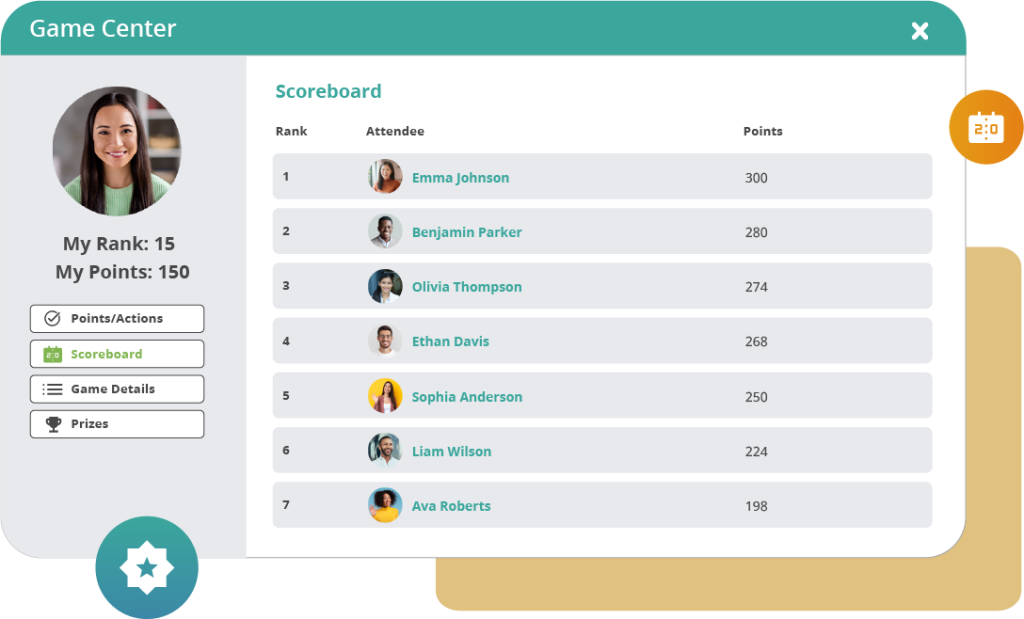
Scavenger hunts inject excitement and interactivity into virtual events, transforming mundane gatherings into thrilling adventures. Attendees are encouraged to explore event spaces virtually, embarking on quests to complete tasks and discover hidden treasures. This interactive activity entertains and fosters a sense of community and collaboration among participants as they work together to conquer challenges and achieve objectives.
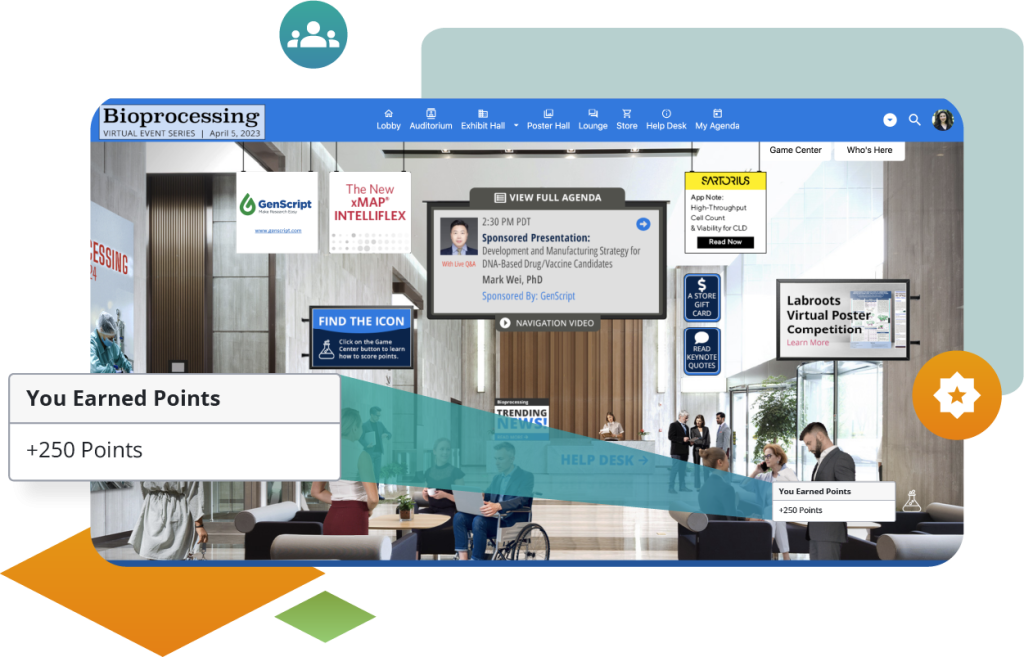
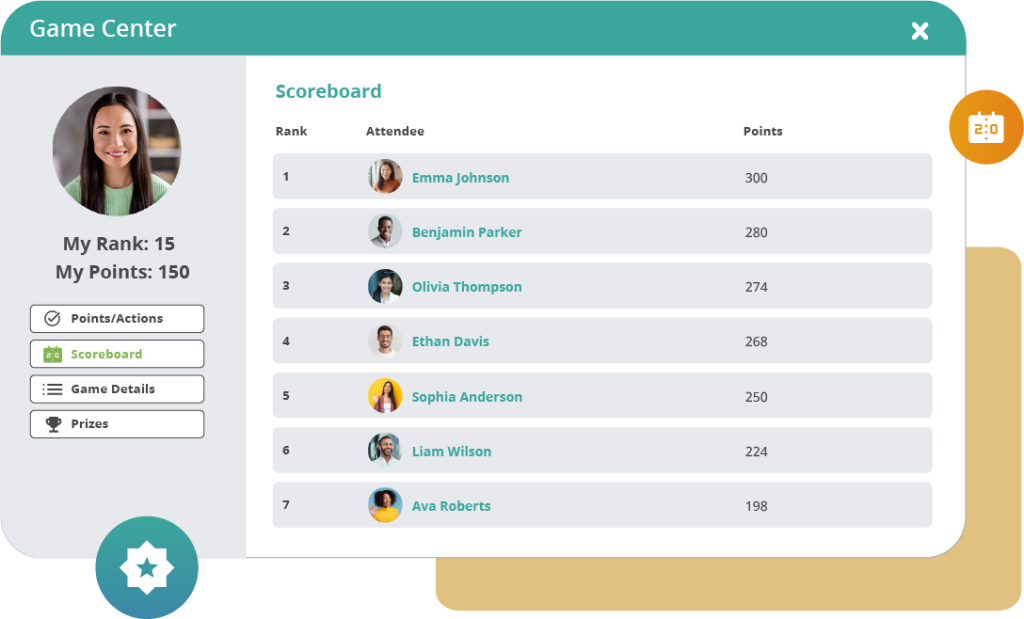
Leaderboards and rewards drive friendly competition and incentivize participation. These dynamic elements amplify attendee engagement and foster a sense of achievement and recognition. By assigning points for various actions such as attending sessions, visiting virtual booths, or engaging in networking activities, Chati transforms every interaction into an opportunity for advancement. Real-time leaderboards showcase the top participants, fueling motivation and inspiring others to strive for excellence. Additionally, rewards such as prizes or special recognition further incentivize engagement, turning virtual events into thrilling competitions where everyone has a chance to shine.
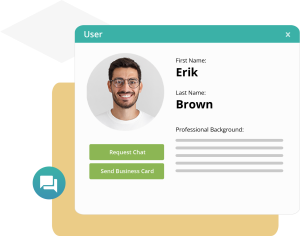
Customizable avatars empower participants to personalize their virtual presence, fostering a more profound sense of identity and belonging within the event environment. With diverse customization options, attendees can tailor their avatars to reflect their unique personalities, preferences, and styles. From choosing hairstyles and outfits to selecting accessories and unique features, every detail is customizable, allowing individuals to stand out and make their mark truly. By embracing customizable avatars, Chati creates a dynamic and immersive event space where attendees feel empowered to connect authentically with others while showcasing their creativity.
In the virtual team-building landscape, leveraging virtual event platforms' capabilities is pivotal in facilitating creative sessions and idea sharing. These platforms are invaluable tools for bringing remote teams together in a collaborative digital environment, where ideas can be exchanged seamlessly regardless of geographical barriers. Virtual event platforms provide a dynamic space for teams to brainstorm, innovate, and problem-solve collectively through features like real-time messaging, video conferencing, and interactive whiteboards. With the right virtual event platform, teams can engage in immersive experiences that foster creativity and drive effective collaboration. When paired with innovative strategies, virtual event platforms amplify the impact of virtual team-building efforts, empowering teams to thrive in today's remote work landscape. With Chati, you can connect spontaneously with team members, share content, and analyze real-time data to brainstorm new ideas and products.
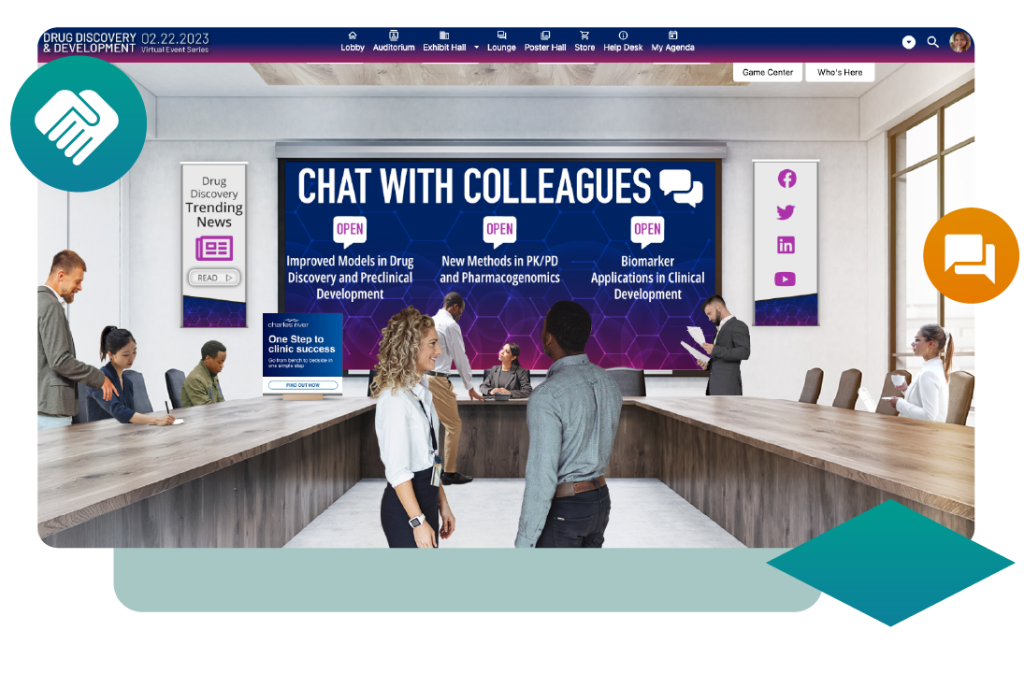
Virtual networking is essential to modern remote team dynamics, offering a space to build connections and foster team bonding. With features like interactive networking lounges and topic-based breakout rooms, virtual event platforms can replicate the experience of in-person gatherings, enabling attendees to engage in organic conversations and discussions. Whether through text chat or video calls, virtual networking provides a versatile space for attendees to connect with peers, industry experts, and thought leaders, regardless of geographical barriers. By embracing virtual networking, teams can foster informal interactions and strengthen relationships, ultimately enhancing collaboration and camaraderie within the organization.

Chati creates inviting spaces for attendees to connect, collaborate, and engage in real-time conversations, fostering organic interactions reminiscent of physical networking events. ChatiConnect video chat and text chat further enhance the networking experience, allowing attendees to communicate in formats that suit their preferences and comfort levels. Additionally, topic-based breakout rooms provide a focused environment for attendees to engage in discussions tailored to their interests, fostering team bonding and informal interactions that transcend geographical barriers.
Virtual event analytics serve as a guiding light, providing invaluable insights into attendee behavior, content performance, and overall event effectiveness. Platforms like Chati offer advanced analytics features to empower event organizers with real-time data and actionable insights. By harnessing these insights, organizers can make informed decisions, refine strategies, and optimize future events to meet attendee needs better and drive meaningful engagement. Some examples of Chati's advanced analytics include:
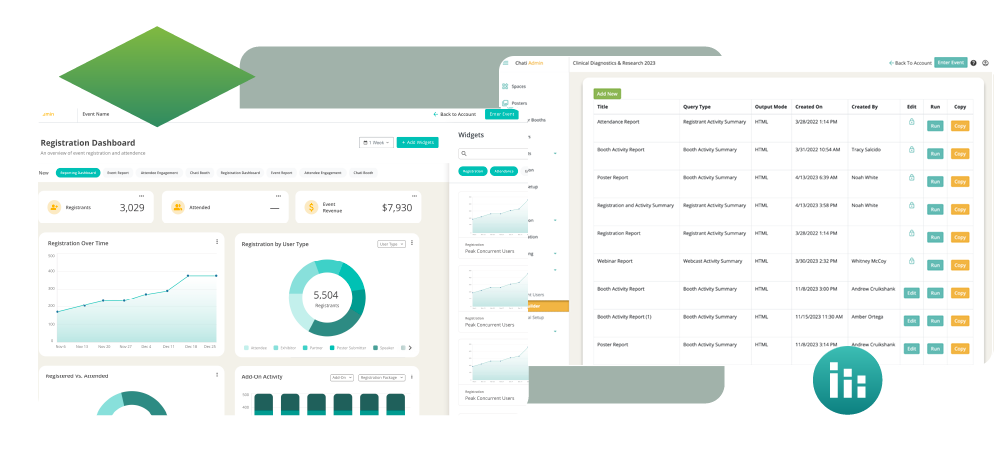
Chati's real-time event dashboard is not just comprehensive, but also incredibly easy to use. It offers event organizers a clear view of attendee engagement, content consumption, and session attendance as events unfold. With its intuitive navigation and user-friendly design, Chati's dashboard is a breeze to use, empowering organizers to make informed decisions and real-time adjustments to enhance the overall event experience.
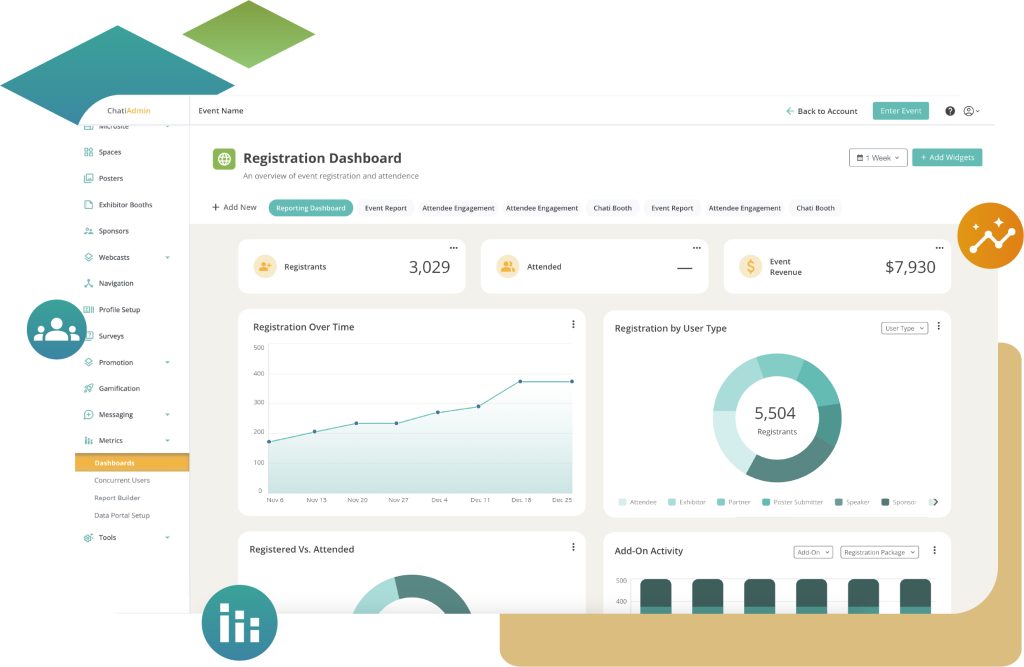
Chati's attendee behavior tracking feature is not just a tool, but a treasure trove of insights. It provides organizers with invaluable data on attendee engagement, networking interactions, and content consumption throughout the event. By analyzing key metrics such as session attendance and engagement levels, Chati empowers organizers to tailor future event offerings to align more closely with attendee preferences and interests, thereby improving the overall event experience.
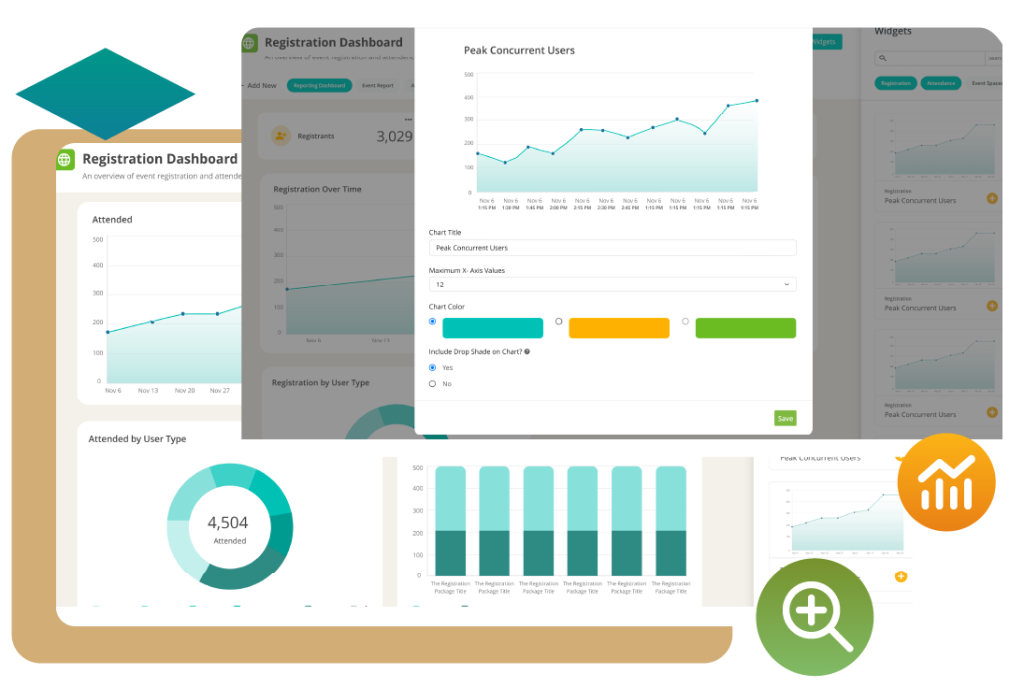
With a range of predefined report templates or the option to create customized reports, organizers can focus on gaining the most relevant attendee insights for their event goals. This customization capability enables organizers to make more informed decisions and strategically plan for future events based on personalized insights.
Analytics come in all shapes and sizes. When choosing your virtual event platform, explore their real-time and post-event analytics options. In addition to the above, you can learn more about Chati's vast analytics offerings here.
As the virtual team-building landscape evolves, embracing future trends and staying ahead of the curve is paramount for organizational success. With the support of innovative platforms like Chati, teams can quickly adapt to these evolving strategies. Chati's versatile features, such as virtual networking lounges, topic-based breakout rooms, and attendee behavior tracking, provide invaluable tools for fostering collaboration and engagement in remote environments. By harnessing advanced analytics and personalized insights offered by Chati's platform, organizations can continuously refine their virtual team-building initiatives, ensuring they remain effective and impactful.
Staying ahead in the virtual team-building landscape requires embracing innovative technologies and leveraging them to cultivate meaningful connections and drive organizational success. With Chati's support, organizations can confidently navigate these changes, forging stronger bonds and achieving greater heights in the virtual realm. Encouraging the implementation of innovative strategies, like leveraging virtual event platforms to enhance team building for remote teams, is essential for fostering engagement, collaboration, and success in today's digital landscape.
Virtual event integrations enhance virtual event experiences for both event organizers and attendees by providing features that increase not only aesthetics but also engagement and connectivity for individuals from all personal and professional backgrounds worldwide.
The importance of choosing the right virtual event integration must be considered. Each integration is designed to meet specific needs, whether to enhance engagement, aesthetics, networking, or other strategies.
Here, we will discuss the top 10 virtual event integration platforms you can use to enhance your next virtual event and improve your brand and networking capabilities with individuals worldwide. Each platform provides unique integrations designed to meet your virtual event and networking needs, which only increases diversity, inclusivity, and connectivity for everyone.

Salesforce is one of the leading customer-oriented companies in the world. It emphasizes connecting companies with customers in a myriad of ways. This includes free on-demand webinars, community events, developer events, and customer success events, which enable companies to strengthen connectivity with their customers from all personal and professional backgrounds and disciplines.
Regarding integration features for seamless event management, Salesforce offers salesforce+, which enables companies to share exclusive content via on-demand or live streaming for a variety of sessions and topics, including artificial intelligence, data, customer relationships, and automation.

Walls.io is a leading digital content provider that prides itself on using social walls to enhance connectivity and inclusivity for individuals worldwide. Their platform offers a myriad of tools and resources designed to motivate marketers and attendees to engage and connect across several industries, including government, healthcare, sports, and education.
Walls.io enhances engagement during virtual events with their UGC platform, designed to magnify a company's narrative and enhance the attendee experience. To accomplish this, UGC collects posts from several social media platforms into one location to enhance engagement and connectivity for individuals worldwide.

Eventbrite is a self-service platform for users to create, search, and attend live events worldwide. Utilizing Eventbrite for virtual registration and ticketing allows companies to expand their global reach, thus expanding diversity, inclusivity, and connectivity for individuals from all personal and professional backgrounds and all over the world. In 2022, Eventbrite commandeered approximately 5 million worldwide events across 180 countries, including approximately 798,000 free and paid creators and approximately 284 million total tickets sold.
Features for managing virtual events on the Eventbrite platform include marketing, a mobile ticket app, a check-in app, an app marketplace, event registration software, event planning, a payment system, and so much more. With Eventbrite, companies and individuals can create and market their next live event seamlessly and quickly.

Calendly is a meeting scheduling automation platform that has successfully connected more than 20 million employees and customers from companies worldwide, including DoorDash, Lyft, and BBitly. Streamlining virtual event scheduling with Calendly will enable companies to increase diversity, inclusivity, and connectivity for their customers and employees while breaking down geographic barriers.
Integrating Calendly with virtual event platforms enables event organizers and attendees to engage and collaborate on new ideas and up-to-date information regarding their respective fields, including education, finance, and technology.

Snapbar is a photo services platform designed to enhance images through artificial intelligence and custom filters for headshots or group photos. It includes features like Snapshot, Snapshot AI, and Studio that companies can use for virtual event solutions.
Enhancing virtual events with Snapbar's photo booth and interactive features enables companies to improve the visuals and aesthetics of their employees and customers. Snapbar has a long list of successful company integrations, including Chati, 6Connex, Goldcast, and Hubilo.

Webinar.net is a leading webinar platform designed to provide live and on-demand webinars and hybrid events with seamless setup and execution. It includes a 60-second and 5-step setup wizard, transparent and simple pricing, and plug-in-free, meaning attendees aren't required to download apps or additional platforms to attend the virtual event.
Key features for hosting engaging virtual events on webinar.net include The Lab and On Stage, which provide event organizers and attendees the power to create immersive and interactive videos that take attendees' engagement to new heights.

GlobalMeet is a leading webcasting solutions platform that provides companies with a myriad of tools and resources for hosting virtual and hybrid events on a global scale. With its self-service or full-service capabilities, GlobalMeet can host events with 50 attendees to more than 100,000, resulting in increased diversity, inclusivity, and connectivity for individuals from all over the world.
Features for hosting large-scale virtual conferences and meetings include GlobalMeet's ability to host in countless languages and automated reply captioning designed for the deaf and hard-of-hearing communities.

GoTo is a leading business communications platform designed to enhance employee and customer engagement through virtual meetings, webinars, and training software, along with additional products and solutions designed to increase diversity, inclusivity, and connectivity for individuals worldwide.
Hosting webinars and virtual events with the GoTo platform enables companies to offer safe, simple, scalable, and seamless experiences for their employees and customers. This results in enhanced engagement and connectivity for over 2.8 million events per year.

WorkCast is a leading webinar, virtual event, and hybrid event platform designed to provide seamless, straightforward, and scalable events for companies and individuals worldwide, including those in finance, publishing, technology, and life sciences.
Benefits of using WorkCast for hosting interactive virtual events include utilizing the WorkCast Creator & Studio, template marketplace, integrations marketplace, and live online event support from their team of experts.

Wordly.ai is a leading artificial intelligence (AI) captioning and translation platform designed to provide simplicity, accuracy, security, and affordability for in-person, virtual, and hybrid events, meeting the networking needs of individuals worldwide.
Improving accessibility and global reach with Wordly.ai includes providing services for more than 50 languages and 2,000 language pairs with captions, subtitles, transcripts, and high-quality audio that break down geographic barriers and increase inclusivity for the seeing—and hearing-impaired.
Here, we shared our top 10 virtual event integrations. These integrations are designed to meet the virtual event engagement and networking needs for individuals and companies from all professional backgrounds. Each platform provides unique tools to meet specific virtual event goals to increase diversity, inclusivity, and connectivity for individuals worldwide. As noted, the importance of choosing the right integrations for successful virtual events cannot be understated or overlooked, simply because every integration is uniquely designed to meet specific goals, and a better understanding of your goal will help guide you towards the appropriate integration, resulting in a more immersive and engaging event experience for all parties.